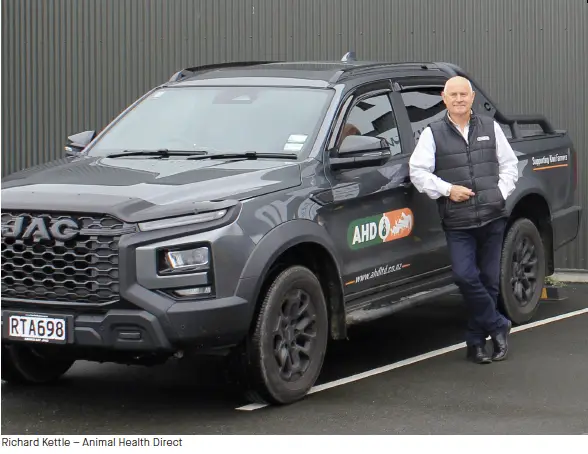
Most mornings, Richard Kettle’s phone fills up with texts from farmers. Not enquiries. Not complaints. Orders. Drums of drench for Wairoa. Supplements heading to the Wairarapa. Fly control products bound for Gore. No quote requested, no price check, just farmers who’ve found a supplier they trust and are getting on with it.
It’s a long way from where AHD started. In 2001, Richard came back to Hawke’s Bay from a marketing role in Auckland with no business plan, a gut feeling, and a willing manufacturer. The product was a simple farm disinfectant. The office was a garage. The company name, Animal Health Direct, was registered almost as an afterthought.
“I always thought in the back of my mind, you never know if things could change down the track,” Richard says. “We didn’t push ‘Animal Health Direct’ as such, because we were very much reliant on our distribution base.”

Twenty-five years on, the name has never been more fitting.
Built on gaps, not blueprints
Richard didn’t arrive in business from nowhere. He grew up on a Hawke’s Bay farming property, great-great-grandson of the founder of Williams and Kettle, and spent the early 1990s in the field selling animal health products for a multinational on the East Coast. He understood farmers because he was one of them.
“I just had that ability to talk to farmers. I understood what they were talking about. I felt comfortable with them.”
A stint in an Australasian marketing role in Auckland followed, working on strategies to combat generic competition across the Asia Pacific region. Interesting work. Not enough fresh air. When the multinationals started consolidating and pulling out of smaller markets, Richard saw an opening and took it.
The early growth of AHD reads less like a business plan and more like a series of good instincts acted on quickly. That first disinfectant filled a space that hadn’t seen genuine innovation in decades. An equine range followed, built on natural remedies adapted for horses.
Then came dairy metabolics, electrolytes, iodine sprays, and the calving products farmers reach for every season.
Where multinationals were locked into fixed formulations, Richard could go back to manufacturers, identify the problems, and fix them. A dairy energy drench that was thick, unpalatable and hard to administer became free-flowing and animal-friendly. Small changes, fast decisions, real results.
“The ability to think on your feet and move quickly was an advantage,” he says. “A lot of manufacturing companies already had ideas sitting there, but no one would listen to them.”
The uncomfortable decision
For years, AHD sold primarily through rural retailers. It was the model everyone used. But as those retailers centralised their ordering and increasingly prioritised the products earning the biggest rebates, AHD kept getting pushed to the back of the shelf.
“We were always secondary or backup,” Richard says. “Which was okay. It got us through a stage. But to go to the next level, we had to change the way we went to market.”
About two and a half years ago, he made the call to go direct. He’s candid about how it felt.
“I was conscious of the relationships I’d built over years and how I was going to look these people in the eye.”
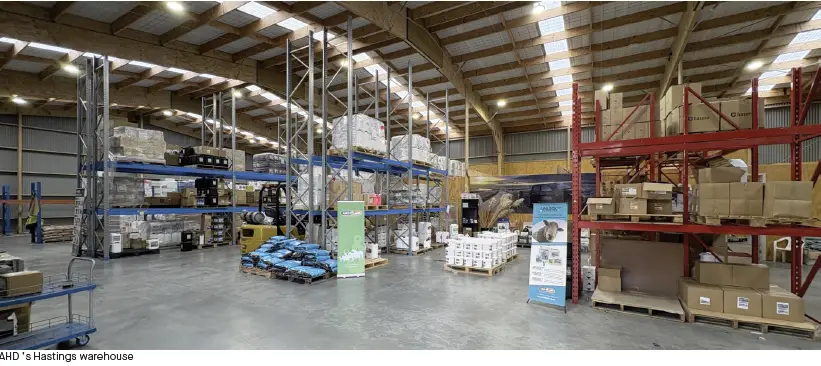
But farmers had been asking the question first. Why can’t we buy directly from you? The demand was already there. AHD spent months getting the infrastructure right before making the move: systems, logistics, a rebuilt website with farmer testimonials and station videos, and the confidence they could handle the volume if it took off. When it did, they were ready.
The digital hook, the phone call close
Here’s one of the more interesting things about selling animal health products to modern farmers: social media gets them in the door, but the phone call closes the deal.
AHD runs targeted campaigns, seasonal newsletters, and educational content online. Farmers research, compare ingredients, watch a station owner talk about why they switched. Then they pick up the phone. Or send a text.
The average farmer AHD deals with is in their mid-to-late 50s. They’re online, but they buy the traditional way. What’s changed is the trust threshold.
“They haven’t even asked about price,” Richard says. “Someone told them about us, they come in, have a look, and they walk out with product.”