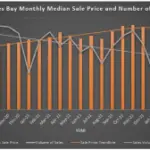
As we move into 2026, New Zealand’s property market is at a turning point. After several years of slow growth and high mortgage rates, economists expect interest rates to gradually ease through 2025 and 2026. The Reserve Bank is likely to reduce the Official Cash Rate from 2.5% to around 2.25% by the end of 2026. This should give buyers more confidence and stimulate new development activity. Nationally, house prices are expected to show modest growth — steady rather than spectacular — as the market finds its balance again and the volume of sales builds.

Hawke’s Bay outlook
Hawke’s Bay’s property market continues to be supported by lifestyle appeal and regional strength. Many people are still moving from larger cities such as Auckland and Wellington, attracted by better affordability, space, and quality of life. The shift to more flexible working arrangements that began during the pandemic has lasted — people can now live where they want, not just where they work.
Tourism has bounced back strongly, with more cruise ships visiting Napier Port and growing interest in the region’s wine, food, and cycle trails. This has supported renewed demand from both investors and owner-occupiers. It’s not the rapid, speculative growth seen in the late 2010s, but rather a more sustainable, lifestyle-driven trend.
Cyclone Gabrielle’s aftermath has also brought new opportunities. While some properties are still affected, the rebuild and infrastructure upgrades have injected new investment into the region. This work is improving resilience and modernising the local environment. Most new residential construction is focused around Poraiti, Mission Hills, Te Awa in Napier and Havelock North, Frimley, and coastal areas such as Haumoana and Te Awanga in Hastings, while Hastings remains the main employment and industrial hub.
What it means for valuers
For valuers, this shifting market demands a careful and balanced approach. Time adjustments, property condition, and location features are increasingly important when interpreting market evidence.
Local factors — such as school zoning, elevation above flood-risk areas, and proximity to upgraded services — can now make a big difference in value. This means valuers must consider each property in its exact location and market moment, rather than relying too heavily on broad regional averages.
Automated Valuation Models (AVMs) used by some lenders can’t always capture these subtleties. They often overlook condition, views, development potential, or unique site factors. In diverse markets like Hawke’s Bay, the valuer’s professional insight remains essential.
The role of AI and new data tools
Technology is helping rather than replacing valuers. AI-powered data tools can quickly gather comparable sales, track consent trends, and highlight emerging market shifts. These systems make it easier to spot unusual patterns, cross-check data, and maintain consistency — but they don’t make the professional judgement for us.
At Williams Harvey, AI is used to inform and support our analysis, not to determine value. For example, tools that flag unusual sales or zoning changes help us stay up-to-date and evidence-based. The most effective approach combines technology with local market understanding.
What to watch heading into 2026
Key trends to keep an eye on include:
■ Listings: Stock levels are still lower than before the pandemic; more listings will help balance price growth.
■ First-home buyers: Falling interest rates may bring more buyers back into the market, especially in the lower-priced brackets.
■ Upgrades and resilience: Energy-efficient and flood-resilient homes will stand out.
■ Zoning changes: Local plan reviews in Hastings and Napier could enable more medium-density housing, particularly near transport links.
Hawke’s Bay’s property market is showing steady strength — not overheated, but supported by lifestyle migration, rebuilding activity, and cautious optimism. For valuers, the challenge is to read the detail: each property’s location, quality, and timing.
Looking ahead to 2026, the best results will come from blending professional experience with the right digital tools — using data to inform judgement, not replace it.